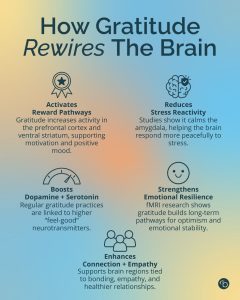
I have been thinking about gratitude recently, as many of us in the United States are poised to celebrate the Thanksgiving holiday. And while for some the day is focused on food and football, for others the day offers an opportunity to really consider what it is we are thankful for, and why.
We have known for some time now that gratitude is the birthplace of joy. We also know that our brains are hardwired to think negatively. This goes back millennia and served us well for quite some time, protecting us from predators. But what happens to our brains when we start to practice gratitude? Science tells us that we can quite literally rewire our brains when we consistently practice gratitude.
Beginning or even continuing a gratitude practice can feel daunting for some people, especially those who live with mental illness, substance use and/or trauma. But science tells us that practicing gratitude can help us move out of depression and anxiety and help us become more resilient in the face of traumatic events. Practicing gratitude helps our brains release serotonin and dopamine, those feel-good neurotransmitters in our brains. Practicing gratitude also helps quiet our amygdala, the fear center of our brains.
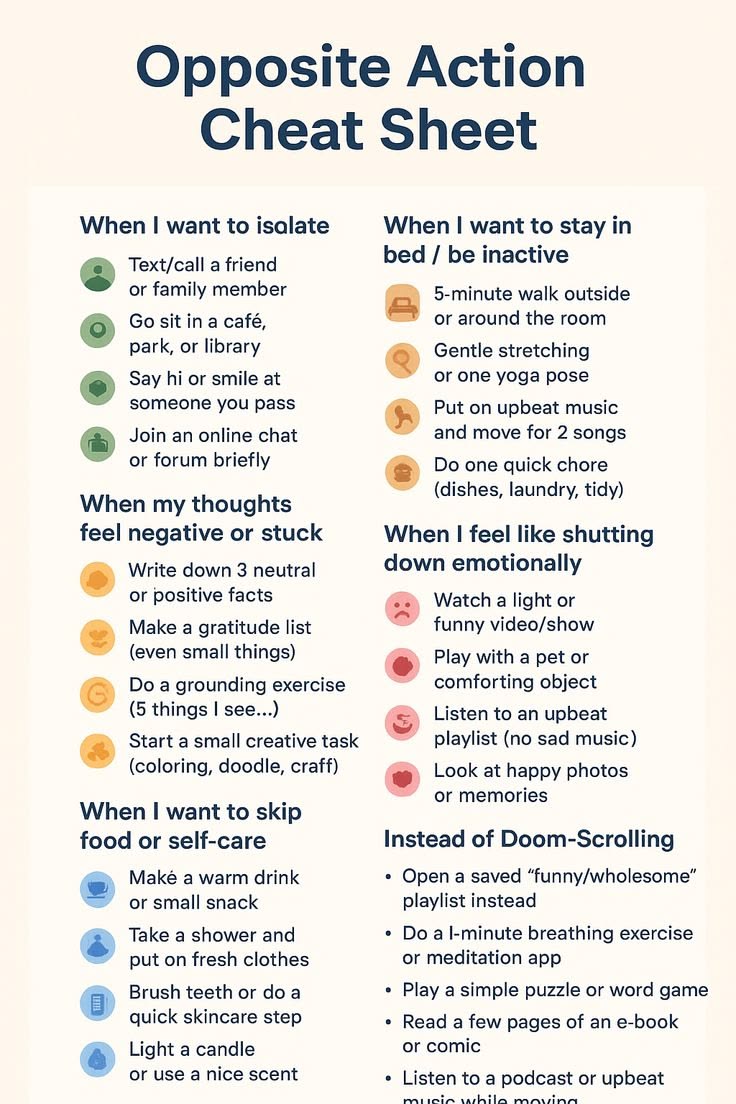
How do we even start a gratitude practice when we live with depression or anxiety or substance use disorder or trauma? How do we practice gratitude when it feels like the world has turned inside out? We start small. Practicing gratitude does not have to sound like we are thankful for having found a zillion dollars in a pot of gold at the end of a double rainbow. Maybe we just practice gratitude for a single rainbow, or a flower or a beautiful sunrise or sunset. Maybe we practice gratitude for the people in our lives who lift us up. Maybe we practice gratitude for our bodies and all they continue to allow us to do as we move through the aging process.
Some people like to start or end their days by practicing gratitude. Starting our days doing so can put us in positive mood and mindset, while doing so at night can help improve our sleep. Perhaps writing down with pen and paper three to five things for which you are grateful a few days a week would be a good way to start. Science tells us that actually putting writing utensil to paper helps solidify our thoughts in our brains, more so than putting a note in our devices. Some people like to collect their gratitude thoughts in a pretty journal or on slips of paper that we’ve put in a beautiful box or vessel and take them out at the end of the year and read, reminding us of all we have to be thankful for.
Science tells us that practicing gratitude can help rewire our brains, helping to lift us out of depression and anxiety, improves our sense of resilience and can improve sleep. We can practice gratitude for all sorts of little things throughout our days, starting small and also for those big moments. Practicing gratitude will help us move through our days with a more positive outlook and mindset. Will it take away all the bad moments or trauma we’ve endured? No. But a gratitude practice can help us look at things a little differently if we give ourselves permission to do so.
What are you thankful for today? Who are you thankful for today? What small thing can you practice gratitude for today? Can you give yourself permission to be thankful for something or someone that is challenging? Gratitude goes a long way in helping us feel better and having a better outlook on our sometimes hard lives.
~ Karri Christiansen, MSW, LCSW, CADC,. CCTP